
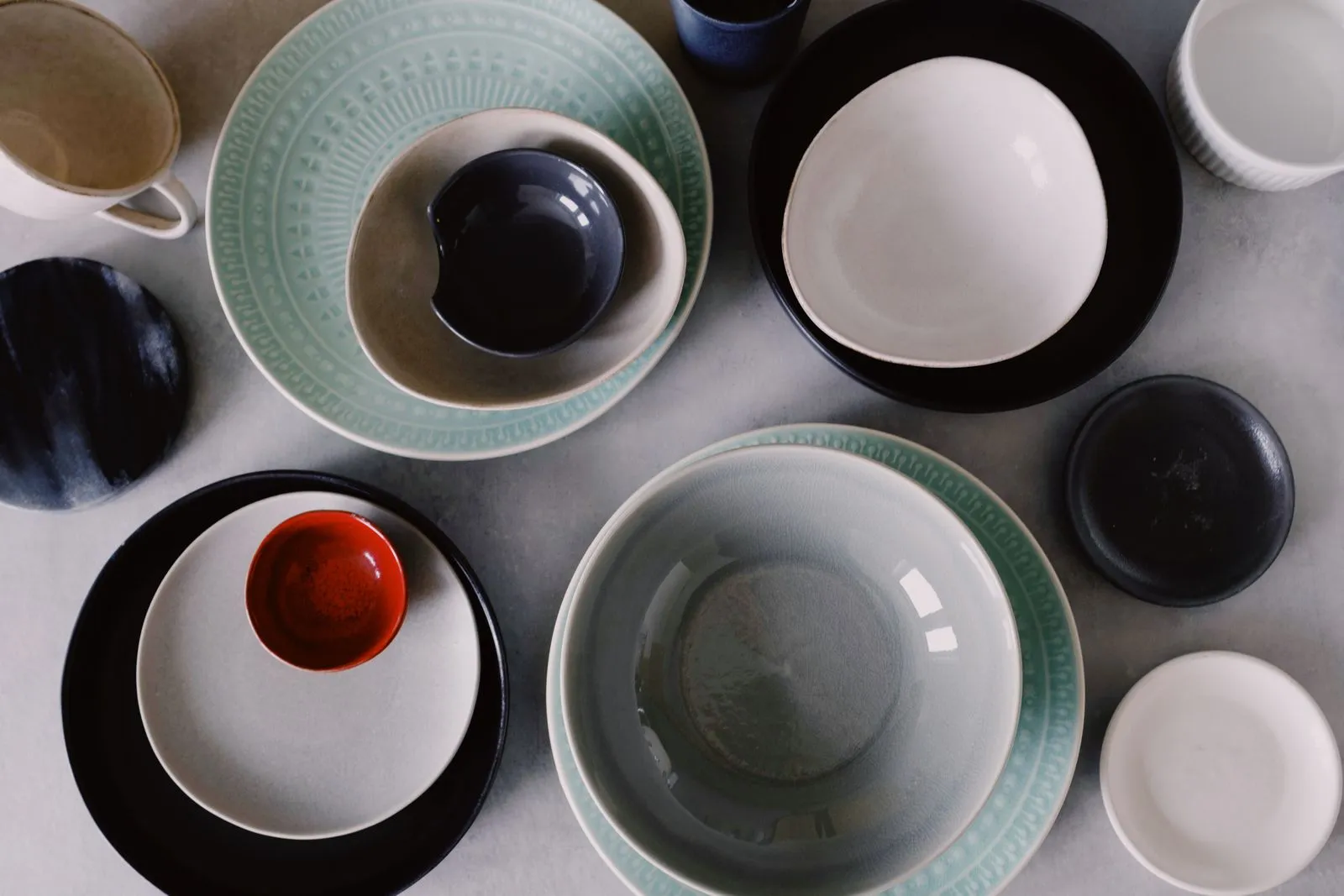
Handmade pottery can be part of everyday meals, not just something kept on display. A few thoughtful habits help protect its glaze, shape, and decorative details over time. Because care instructions vary by clay, glaze, and firing, start with any guidance from the maker. When you are unsure whether a piece is safe for a dishwasher, microwave, or oven, gentle handwashing and avoiding sudden temperature changes are sensible choices.
Clean Gently
Wash pottery by hand with warm water, mild dish soap, and a soft sponge or cloth. Avoid scouring pads, abrasive powders, and harsh cleaners, which can scratch a surface or wear down a decorative finish. Rinse away soap and dry the piece with a soft towel, especially around handles, foot rings, and textured details where water can collect.
For stuck-on food, let the dish soak briefly in warm, soapy water before cleaning. Do not scrape it with a knife or metal utensil. If a mark remains, try a nonabrasive sponge and gentle pressure. Avoid leaving pottery submerged for long periods, particularly if it has an unglazed base or a crack that could hold water.
Use Heat With Care
Check with the maker before putting a handmade piece in a dishwasher, microwave, or oven. Some pottery is designed for these uses, while other pieces may be vulnerable to heat, moisture, or movement during a wash cycle. Handwashing is a careful default when you do not have specific care instructions.
Protect pottery from sudden temperature changes. Do not move a cold dish straight into a hot oven, pour boiling liquid into a chilled cup, or place a hot piece on a cold or wet surface. Set hot dishes on a dry trivet or heat-resistant pad, and allow them to cool gradually before washing.
Store Without Scratches
Give each piece a stable place in a cupboard, away from edges where it could be knocked. Stack only dishes that sit securely together, and place a soft cloth, felt pad, or paper towel between them to reduce rubbing. Keep heavier pieces at the bottom of a stack and avoid piling more dishes on top than the lower pieces can support.
Store mugs and handled items so their handles do not bear the weight of another piece. For bowls or plates that do not stack evenly, use a rack or store them separately. When moving pottery, support it from underneath with both hands rather than lifting it by a handle or rim.
Prevent Everyday Wear
Use wooden, silicone, or other nonmetal utensils when practical, especially on glazed surfaces that show marks easily. Place pottery on a board or mat rather than dragging it across a countertop. For serving, choose a piece sized for the food and handle it with a steady grip, since chips often happen during hurried transfers or contact with hard surfaces.
Check pieces occasionally for new chips, cracks, or changes in the glaze. Stop using a damaged item for food if its surface is difficult to clean or if the maker advises against it. Keep care notes with the piece, and ask the potter about safe uses when details are unclear. These small steps help you enjoy custom work with confidence.
Gentle washing, cushioned storage, and gradual temperature changes go a long way toward preserving handmade pottery. Follow the maker’s instructions whenever available, since each piece can have different care needs. If you have questions about a custom piece from Mersey Tableware, contact the studio for guidance.